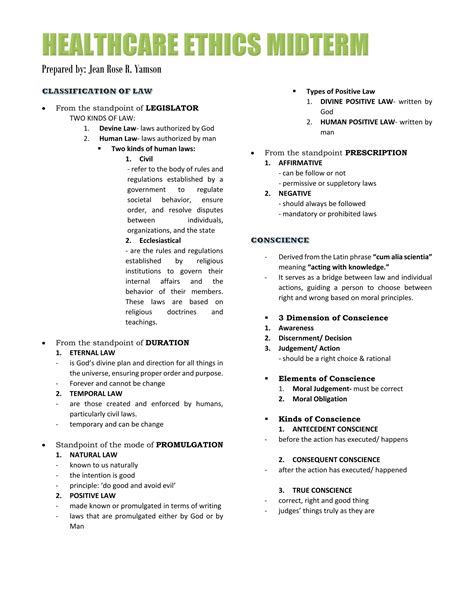
Welcome to this comprehensive guide on ethical vocabulary tailored for those entering the healthcare field. Navigating the ethical landscape of healthcare can be daunting, but having a solid grasp of key ethical terms and concepts will empower you to make thoughtful decisions that prioritize patient welfare and uphold the integrity of your profession. This guide is designed to provide you with actionable advice and practical solutions, addressing common pain points and concerns that new healthcare professionals often encounter.
Understanding the Ethical Landscape in Healthcare
Ethical challenges are an inevitable part of healthcare. These challenges can range from simple dilemmas to complex situations requiring careful consideration and deliberation. The goal is not to eliminate these challenges but to understand them better so you can address them with integrity and compassion.
Ethical issues in healthcare often involve balancing multiple, sometimes conflicting, responsibilities. For example, maintaining patient confidentiality while ensuring that necessary information is shared to provide effective care. Another example is respecting a patient's autonomy while also ensuring their safety. This guide aims to demystify these issues and provide you with the vocabulary and frameworks to handle them effectively.
Quick Reference
Quick Reference
- Immediate action item: Familiarize yourself with the key ethical principles in healthcare, such as autonomy, beneficence, non-maleficence, and justice.
- Essential tip: Always seek to understand the patient’s perspective and involve them in decision-making to respect their autonomy.
- Common mistake to avoid: Neglecting to update your knowledge of ethical guidelines and legal requirements; keep up-to-date with continuing education opportunities.
Foundational Ethical Principles
Before diving into specific scenarios and cases, it’s important to grasp the fundamental ethical principles that guide healthcare practice.
The four fundamental ethical principles that form the backbone of healthcare ethics are:
- Autonomy: Respect for a patient's right to make informed decisions about their own healthcare.
- Beneficence: Acting in the best interest of the patient, providing care that benefits them.
- Non-maleficence: Avoiding harm to the patient.
- Justice: Ensuring fair distribution of healthcare resources and equitable treatment for all patients.
Let's explore these principles in more detail:
Autonomy
Autonomy in healthcare respects the patient’s right to make informed decisions about their treatment. This means giving patients complete information about their health conditions, treatment options, risks, and benefits so they can make decisions that are right for them.
Respecting patient autonomy is critical. It ensures that patients are active participants in their care, rather than passive recipients. This principle is particularly important in situations where patients might have different cultural or personal values about medical interventions.
Beneficence
The principle of beneficence requires healthcare providers to act in the best interest of the patient. This means offering treatments and interventions that are likely to improve the patient’s health outcomes.
Beneficence also involves advocating for the patient's interests and ensuring that the care provided is aimed at improving their quality of life. For instance, when considering treatment options, healthcare providers should choose those with the highest likelihood of benefit and the least potential harm.
Non-maleficence
Non-maleficence is often summarized as “first, do no harm.” This principle obliges healthcare providers to avoid actions that could potentially harm the patient. It emphasizes the importance of preventing harm and recognizing that some treatments may have unintended negative consequences.
When applying this principle, healthcare providers must weigh the potential benefits of a treatment against the possible risks and side effects. This careful consideration helps ensure that interventions are chosen that will not cause undue harm to the patient.
Justice
Justice in healthcare involves treating all patients fairly and ensuring equitable access to healthcare resources. It addresses issues of fairness and equity in treatment, resource allocation, and healthcare policy.
For example, justice would require that all patients receive the same standard of care, regardless of their socioeconomic status, and that healthcare resources are distributed in a way that is fair and just. This principle challenges healthcare providers to think critically about health disparities and to work towards eliminating them.
Ethical Decision-Making Framework
To navigate ethical dilemmas effectively, healthcare professionals can use a structured decision-making framework. This framework helps in systematically evaluating ethical issues and making well-informed decisions.
Here is a step-by-step guide to ethical decision-making in healthcare:
Step 1: Identify the Ethical Dilemma
Clearly define the ethical issue at hand. Is it a conflict between respecting patient autonomy and ensuring their safety? Is it a situation where resource allocation is challenging?
Step 2: Gather Information
Collect all relevant information related to the ethical dilemma. This includes medical facts, patient preferences, legal requirements, and potential consequences of different actions.
Step 3: Evaluate the Options
Consider all possible courses of action. Analyze each option against the fundamental ethical principles: autonomy, beneficence, non-maleficence, and justice.
Step 4: Consult Experts
Seek advice from colleagues, ethicists, or other healthcare professionals who can provide additional perspectives and expertise.
Step 5: Make a Decision
Choose the option that best aligns with the ethical principles and is likely to lead to the best outcome for the patient.
Step 6: Implement the Decision
Carefully implement the decision, ensuring that all relevant parties are informed and that the decision is carried out in a way that respects patient rights and well-being.
Step 7: Reflect and Learn
After the decision has been implemented, reflect on the process and outcomes. Consider what could be done differently in the future to improve ethical decision-making.
Practical Examples of Ethical Decision-Making
Let’s explore some real-world scenarios to illustrate how the ethical decision-making framework can be applied in healthcare settings.
Scenario 1: Patient Autonomy vs. Safety
A patient with severe mental health issues refuses to take prescribed medication, which is necessary to prevent a relapse. The healthcare provider must balance respecting the patient’s autonomy with ensuring their safety.
How-To:
Here’s how you can navigate this scenario:
Step 1: Identify the Ethical Dilemma
The ethical dilemma here is balancing patient autonomy and the need to prevent harm.
Step 2: Gather Information
Talk to the patient to understand their reasons for refusing medication. Review medical records and consult with mental health professionals.
Step 3: Evaluate the Options
Consider the following options:
- Respect the patient’s decision and offer alternative treatments.
- Emphasize the importance of medication and explore alternative ways to address the patient’s concerns.
- If the patient poses a significant risk to themselves, consider legal options such as involuntary commitment.
Step 4: Consult Experts
Consult with a mental health expert and an ethics committee to gain additional perspectives.
Step 5: Make a Decision
After careful evaluation, decide on the course of action that best aligns with ethical principles.
Step 6: Implement the Decision
Communicate the decision clearly to the patient and involve them in the decision-making process as much as possible.
Step 7: Reflect and Learn
Reflect on the decision and its outcomes. Consider what you learned and how you can apply this knowledge to future situations.
Scenario 2: Resource Allocation
In a hospital with limited resources, a patient requires a high-cost treatment that is not covered by insurance. Balancing justice and resource allocation becomes a challenge.
How-To:
Here’s how you can approach this situation:
Step 1: Identify the Ethical Dilemma
The dilemma is ensuring fair distribution of limited healthcare resources.