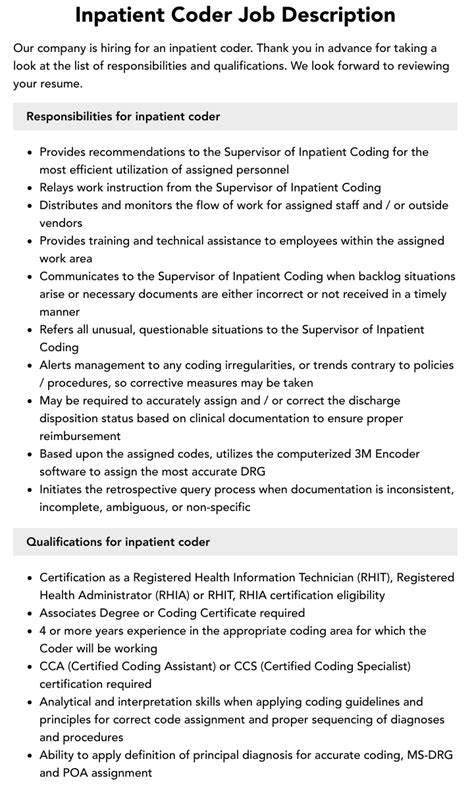
The health information coder profession is becoming increasingly significant as the healthcare industry grows and adapts to complex regulations. This role is critical in translating patient diagnoses and treatments into standardized codes that facilitate billing and ensure accurate healthcare record-keeping. To thrive in this profession, understanding both the technical nuances and practical applications of coding is essential.
Key Insights
- Mastery of coding standards like ICD-10 and CPT is paramount for compliance and billing accuracy.
- Attention to detail is critical, as errors can lead to reimbursement issues and legal complications.
- Continuous education and adaptation to new coding updates are necessary to maintain high coding standards.
Essential Skills and Training for Health Information Coders
To excel as a health information coder, one must have an extensive understanding of coding systems, especially the International Classification of Diseases, 10th Revision (ICD-10) and the Current Procedural Terminology (CPT). These systems are the backbone of healthcare documentation and coding. Training programs focus on these areas, ensuring that coders can accurately translate clinical information into the appropriate codes. Practical, hands-on experience often plays a significant role in professional development, as it enables coders to apply theoretical knowledge to real-world scenarios.Regulatory Compliance and Best Practices
Health information coders are responsible for maintaining compliance with healthcare regulations to ensure accuracy in patient records and proper billing practices. Regulatory compliance is a continuous and evolving process, requiring coders to stay updated on changes in laws and healthcare standards. The Health Insurance Portability and Accountability Act (HIPAA) also plays a pivotal role in safeguarding patient information. By adhering to these regulations, coders help prevent legal issues and protect patient privacy. Best practices include rigorous training, ongoing education, and the use of the latest coding tools and software to enhance efficiency and accuracy.FAQ Section
What are the primary challenges faced by health information coders?
Health information coders often encounter challenges such as keeping up with frequent coding updates, dealing with complex medical terminologies, and ensuring adherence to regulatory changes that impact billing and documentation practices.
How can a coder stay updated with the latest coding standards?
Continuous education through professional courses, seminars, and webinars is essential. Additionally, membership in professional coding organizations like AHIMA (American Health Information Management Association) provides access to the latest updates and resources.
The health information coder profession is a cornerstone of the healthcare industry, demanding both technical acumen and practical skills. As the industry continues to evolve, so do the standards and practices of healthcare coding. Aspiring and current coders must commit to ongoing education and stringent compliance to navigate this dynamic field effectively. By focusing on mastery of coding systems, regulatory adherence, and best practices, health information coders can ensure accuracy, compliance, and efficiency in healthcare documentation and billing processes.