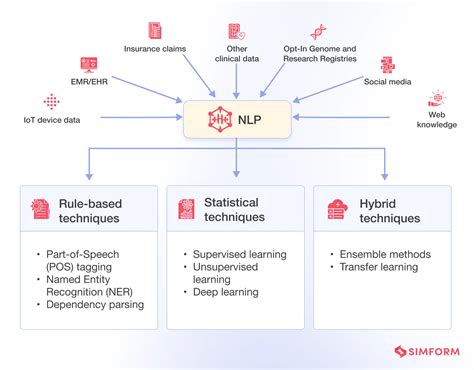
In the rapidly evolving landscape of healthcare, natural language processing (NLP) techniques are proving to be transformative, facilitating vast improvements in patient care and operational efficiency. The ability to decipher, analyze, and generate human language data presents a plethora of opportunities for healthcare institutions, ranging from enhancing clinical documentation to advancing patient interaction systems.
The Role of NLP in Clinical Documentation
The healthcare sector heavily relies on accurate and efficient clinical documentation. NLP techniques have become instrumental in streamlining this process. By automating the extraction and summarization of patient records, clinicians can focus more on patient care rather than paperwork. For instance, using NLP algorithms, medical scribes can transcribe doctors’ dictations into structured records, significantly reducing the administrative burden. Evidence-based studies have shown that NLP applications in clinical documentation can improve accuracy, leading to better patient outcomes.Real-World Implementation
One practical example is the implementation of NLP in electronic health records (EHR) systems. These systems utilize NLP to convert narrative patient notes into structured data, enhancing the accessibility and utility of the information for future reference. By integrating NLP, healthcare providers have observed a marked improvement in data consistency, enabling more precise diagnoses and tailored treatments.Advancements in Patient Interaction Systems
Another critical area where NLP is making significant strides is in patient interaction systems. These systems leverage NLP to create more efficient and responsive communication channels between patients and healthcare providers. For instance, chatbots equipped with advanced NLP capabilities can handle routine inquiries, schedule appointments, and even provide preliminary medical advice, which alleviates the workload on healthcare professionals.Real-World Implementation
Take, for instance, the widespread use of virtual health assistants like virtual nurses that interact with patients through NLP-enabled interfaces. These assistants can understand patient symptoms and provide initial guidance, which is particularly beneficial in telehealth environments. These systems are not only improving patient satisfaction but also ensuring timely medical advice, thereby enhancing overall healthcare service delivery.Key Insights
- NLP techniques streamline clinical documentation, enabling better focus on patient care.
- Advanced NLP applications enhance patient interaction systems, offering more responsive communication channels.
- Integrating NLP into EHR systems can lead to significant improvements in data accuracy and treatment precision.
How do NLP techniques improve clinical documentation?
NLP techniques automate the extraction and summarization of patient records, reducing administrative burden on clinicians and improving the accuracy of clinical documentation.
What benefits do NLP-driven patient interaction systems provide?
NLP-driven systems like virtual health assistants can handle routine inquiries, schedule appointments, and offer preliminary medical advice, thereby improving patient satisfaction and ensuring timely medical advice.
In conclusion, as we continue to harness the power of NLP techniques, the healthcare sector stands to benefit immensely from enhanced efficiency, improved patient care, and better data accuracy. The journey towards fully integrated NLP systems in healthcare is ongoing, and the potential it holds is truly transformative.